Don't be Fooled by Deceptive Puppy Mills
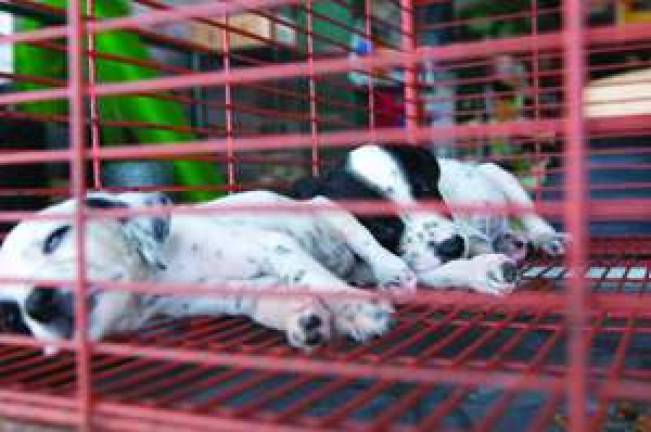
PET STORES MIGHT DISGUISE SAD ORIGIN OF CUTE POOCHES How many of us have walked past a New York City pet store and stopped to look at the adorable puppies playing in the window? Have you ever wondered where they come from? If you have no idea, you are not alone. According to a national survey conducted by Lake Research Partners on behalf of the American Society for the Prevention of Cruelty to Animals, more than three-fourths of all adults nationwide do not know where the puppies in pet stores come from. However, most adults surveyed (80 percent) said they would not buy a puppy from a pet store if they knew the truth-most pet store puppies come from puppy mills. Puppy mills are large-scale commercial breeding operations where the dogs live in filthy, overcrowded cages. They are often crammed in dark, poorly ventilated sheds where they are exposed to sweltering temperatures in the summer and below-freezing temperatures in the winter. In order to maximize profits, female dogs are bred at every opportunity with little to no recovery time between litters. When, after a few years, the females can no longer reproduce or when their breed goes out of "style," the dogs are often abandoned, shot or starved until they eventually die. Pet store owners will often deny that they get their puppies from puppy mills. Instead they will say their puppies all come from "USDA licensed breeders." If you dig a little deeper into what this actually means, you'll find the standards of care required by the U.S. Department of Agriculture are woefully inadequate and not what most of us would consider humane. Under current federal law, it is completely legal to keep dogs in tiny, wire-bottomed cages stacked on top of each other for their entire lives. The conditions we think of when we think of puppy mills are exactly the conditions found in most USDA licensed facilities. In fact, any breeder who has more than three breeding female dogs must be licensed by the USDA to sell puppies to pet stores or brokers. So, USDA licensure is actually a pretty good indicator that these breeders are, in fact, puppy mills. Unfortunately, most consumers don't realize that many puppies sold online also come from puppy mills. To buy a puppy online is just as bad as buying one in a pet shop, maybe even worse. Websites that let you buy a puppy online often claim to be responsible dog breeders and will usually ship a puppy directly to you. They even use fancy terms like "AKC registered," "pedigree" and "health certified," and include photos of cute, cuddly puppies for sale. But the only way to be sure that a puppy came from a reputable source is to see for yourself where he or she came from and meet the puppy's parents, and buying online often does not allow for this opportunity. Responsible breeders would never sell to someone they haven't met, because they want to screen potential buyers to ensure the puppies are going to good homes. Responsible breeders are individuals who have focused their efforts on a select breed. Through breeding and ongoing study, they have become experts in the breed's health, heritable conditions, temperament and behavior. They operate in an open, undisguised manner, allowing and even encouraging potential buyers to visit and tour their properties. A responsible breeder will show you the parents of the puppy, and if, for any reason, you can't keep the dog, a responsible breeder will take it back. If you are looking to make a puppy part of your family, check your local shelters and make adoption your first option. If you live in New York City, the ASPCA Adoption Center (424 E. 92nd St. between First and York avenues) has several dogs and puppies available for adoption that need loving homes. Not only will you be saving a life, but you will ensure that your money is not going to support a puppy mill. If you're committed to a specific breed of dog and can't find what you're looking for at your local shelter, contact a rescue group for that breed. The ASPCA's No Pet Store Puppies campaign is aimed at educating consumers about puppy mills and putting an end to this inhumane industry. Please visit www.NoPetStorePuppies.com and sign our pledge not to shop at your local pet store for any items-including food, supplies or toys-if the store sells puppies. The ASPCA believes that consumer action is a critical element in the fight against puppy mills. All pets, dog and cats alike, will enjoy toys and supplies purchased from puppy-free stores every bit as much as those purchased at stores selling puppies, so why not exercise your consumer power by only purchasing toys and other supplies at stores that do not support the puppy mill industry? And please, make adoption your first option, or choose a responsible breeder. Submitted by Cori Menkin, senior director, ASPCA Puppy Mills Campaign